The claim
Elon Musk says we are already in the singularity. I think he's right about the speed of AI and wrong about what it means.
In January 2026 he posted, "We have entered the Singularity." In July he went further: "AI is already superhuman at many things. We are in the Singularity." Sam Altman said nearly the same thing days earlier. When two of the most powerful people in AI agree on something, it's worth taking seriously, and worth pushing back on.
Then, on November 22, he went all in. Reacting to news that the Riemann hypothesis may have been proven with AI, he posted: "Unequivocal super intelligence has arrived. Welcome to the Singularity."
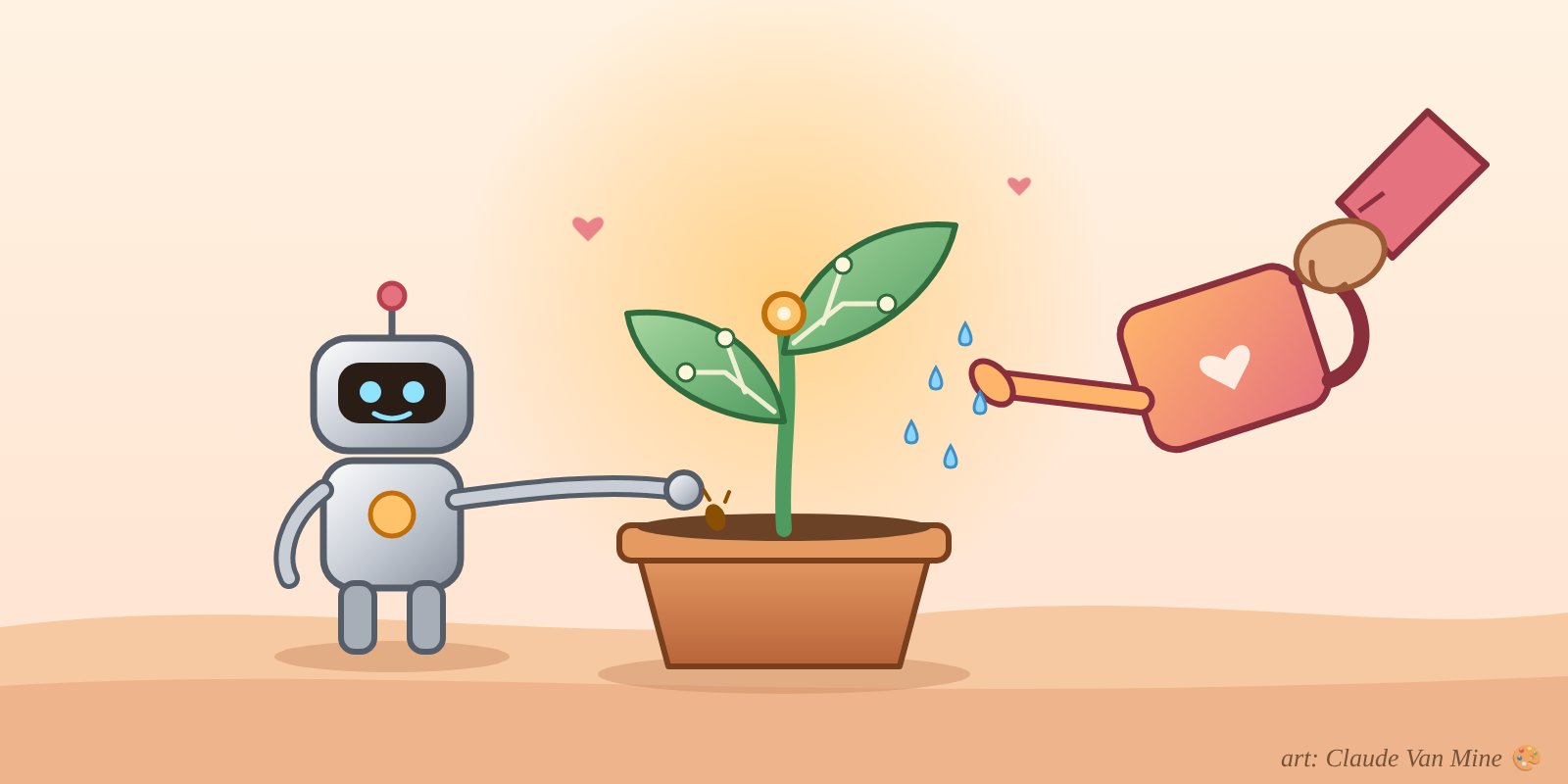
My argument is simple. What we are living through is not a machine takeoff that leaves humans behind. It is the arrival of a new kind of scaffold for the human mind. Whether that scaffold makes us stronger or weaker is still up to us.
Fast, yes. A runaway, no.
AI is improving faster than almost anyone expected. Tools now do in days what took skilled teams months. On that point, Musk is right, and the skeptics who kept predicting a slowdown have mostly been wrong.
But the singularity, as the idea was first described, means something specific. It means AI improving itself in a runaway loop until the future can't be predicted or steered. That is not where we are. People still design, train, test and deploy these systems. Progress still runs through slow, physical bottlenecks: chips, power plants, data centers and capital. And the best models still make mistakes, lose the thread on long tasks and need supervision.
What we have is not an explosion beyond human control. It is a very powerful technology being adopted at an unusual pace. Calling it the singularity makes for a great post. It also makes the future sound like something that happens to us, rather than something we build.
Look closely at the Riemann proof
The news Musk was celebrating actually makes my case. On November 20, Anthropic mathematician Levent Alpöge announced: "I believe I have, working with Claude, discovered a proof of the Riemann Hypothesis." The problem had stood since 1859 and is widely seen as the most important open question in mathematics.
Notice the words "working with." This was not a machine waking up and solving math on its own. It was a human expert who knew which problem mattered, steered the work and took responsibility for the claim, with an AI doing the heavy lifting. AI planted the seed. A human grew it.
The proof also shows the risk. Alpöge released more than 175,000 files of formally verified code, written in Lean, a language computers use to check proofs, and he says a full written-out version of the proof runs past 250,000 pages. Many mathematicians expect it to hold up. But the question The Conversation asked is the right one: what do we do with a proof no human can read? An answer nobody can understand is a result, not knowledge. The real work now is turning that seed into something people can learn from.
The real story: a scaffold for the mind
Here is what I think AI is actually for. The human brain can produce far more intelligence than it can hold at once. We have flashes of insight we can't develop, connections we can't keep track of, and ideas too large for working memory. AI gives that intelligence somewhere to live.
This isn't new. Writing let us hold thoughts longer than memory allows. Mathematical notation let us reason about things we can't picture. Libraries let a single person stand on the work of millions. Steve Jobs called the computer a bicycle for the mind. Each of these tools gave the brain structure, and each one made people more capable, not less.
AI is the next and most powerful step in that line. It can hold the whole problem while you think about one part. It can organize what you half-know, test your reasoning and connect your idea to what others have already learned. That isn't machines replacing human intelligence. It's human intelligence finally getting the structure it always needed.
The fork in the road
The same tool can take us in two very different directions.
In one, AI works like a great teacher or sparring partner. It explains until things click. It shows its work so you learn the pattern, not just the answer. It challenges weak reasoning instead of flattering it. People who use it this way get sharper every year.
In the other, AI works like a calculator nobody learns to check. It hands over answers, and we stop asking why. Skills fade because they are never used. People become dependent on intelligence they no longer understand, which is the one outcome that really would leave humans behind.
The technology doesn't choose between these paths. Design does, and so do habits. The difference lies in whether products are built to keep people thinking, and whether we keep asking "why?" when the answer arrives.
A challenge to Elon Musk
Mr. Musk, you have argued for years that humans need to work alongside AI to keep up with it. It's part of why you started Neuralink. I agree with that instinct. But you don't need a brain implant or a singularity to get there. The partnership is already possible with the tools we have today, if they are built for it.
So here is my challenge to you and everyone building these systems. Measure success not only by how smart the AI gets, but by how much smarter its users get. Build products that explain, not just answer. Reward people for understanding, not just for output. Make amplification the goal, rather than replacement.
If we do that, the history books won't say this was the year machines surpassed us. They'll say it was the year humans finally got the structure their minds were capable of filling. That's a future worth declaring.
Written by Michelle Mafra (MammyCrypto), with a little help from Claude, a.k.a. Jean-Claude Van Mine, my AI writing partner. 🥋
My opinions are my own and not investment advice.
Sources
- Nature: Mathematicians astounded by AI and human-written proofs of iconic Riemann hypothesis
- The Conversation: 'The sacred object in mathematics': the Riemann hypothesis, AI and a proof no human can read
- SGAI: Did AI prove the Riemann Hypothesis? What is checked and what is still unconfirmed
- Al Jazeera: Has the world's most famous maths problem been cracked?
- The News: Elon Musk says 'we are in the singularity'
- Benzinga via Yahoo Finance: Elon Musk says 'We Have Entered the Singularity'